Product Transparency Hub - Stala ONE

Transparent product information. Traceable data. Clear documentation.

At Stala, we believe that product-related environmental information should be based on facts, documented data and transparent calculation methods.

This hub provides detailed information about the materials, manufacturing processes, product carbon footprints and environmental performance of the Stala ONE collection.

Explore the data, calculation methods and supporting documentation behind our product-related information and environmental claims.

Product & material information 

Materials selected for quality and performance

Stala ONE products combine stainless steel, carefully selected components and functional design. Material selection plays an important role in product performance, manufacturing and environmental impact.

Below, we provide an overview of the key materials and their specifications.


Stainless steel

Stala ONE products are manufactured using stainless steel grades selected for their intended applications, durability and technical properties.

Material specifications:

  • Stainless steel grades: 1.4307 (matt finish) and 1.4509 (smooth finish), 1.4301 (bowl component)

  • Stainless steel supplier: Outokumpu

  • Stainless steel production route: EAF (Electric Arc Furnace)

  • Stainless steel production: Finland 

  • Recycled content: See product-specific material information below.


Outokumpu Circle Green® stainless steel

Stala ONE worktops and surfaces are available with Outokumpu Circle Green® stainless steel.

Circle Green is Outokumpu's low-emission stainless steel product, manufactured using a combination of recycled materials and low-emission production processes.

Its product-specific emission factor is lower than the global industry average for stainless steel.


Other materials and components

Stala ONE products also include other materials and components, selected according to their technical and functional requirements.

Worktops Top surface material (matt finish) Stainless steel Cold Rolled Strip, Outokumpu Circle Green, grade 1.4307
Top surface material (smooth finish) Stainless steel Cold Rolled Sheet, Outokumpu Circle Green, grade 1.4509
Bowl component Stainless steel 304, grade 1.4301
Support structure Plywood (birch) + MDF board
Glue Polyurethane adhesive
Water trap Polypropylene (95%) + stainless steel (5%)
Sinks  Top surface Stainless steel Cold Rolled Strip, Outokumpu Circle Green, grade 1.4307
Bowl Stainless steel 304, grade 1.4301
Tap, bowl and functional area support Stainless steel Cold Rolled Strip, Outokumpu Circle Green, grade 1.4307
Clips stainless steel
Mounting strips Aluminium
Glue Polyurethane adhesive, Silane-modified polymer (MS polymer) adhesive, acrylic adhesive
Water trap Polypropylene (95%) + stainless steel (5%)
Accessories WOOD-38 FSC certified wood (Oak)*, silicone Elastosil LR3003/60 
COMP-38 Richlite
DRY-38 UPM Formi EcoAce WB40
DRIP-38 Silicone Elastosil LR3003/80


More information:

Elastosil

*Certificate number: BM-COC-008509, License code: FSC-C168312

Richlite, NSF®, FSC®, HPD®, EPD®, GREENGUARD®, Declare certified resin-infused recycled paper, made from 100% recycled products and silicone Elastosil LR3003/60

UPM Formi EcoAce WB40; Wood fiber loading from 40% to 60%, ISCC certified renewable based polymer


Country of origin

Stala ONE products are manufactured in Lahti, Finland. The origin of individual materials and components varies according to the supplier and product specification.

Worktops and sinks Finland
WOOD-38 Estonia
COMP-38 United Kingdom
DRY-38 Finland
DRIP-38 Finland


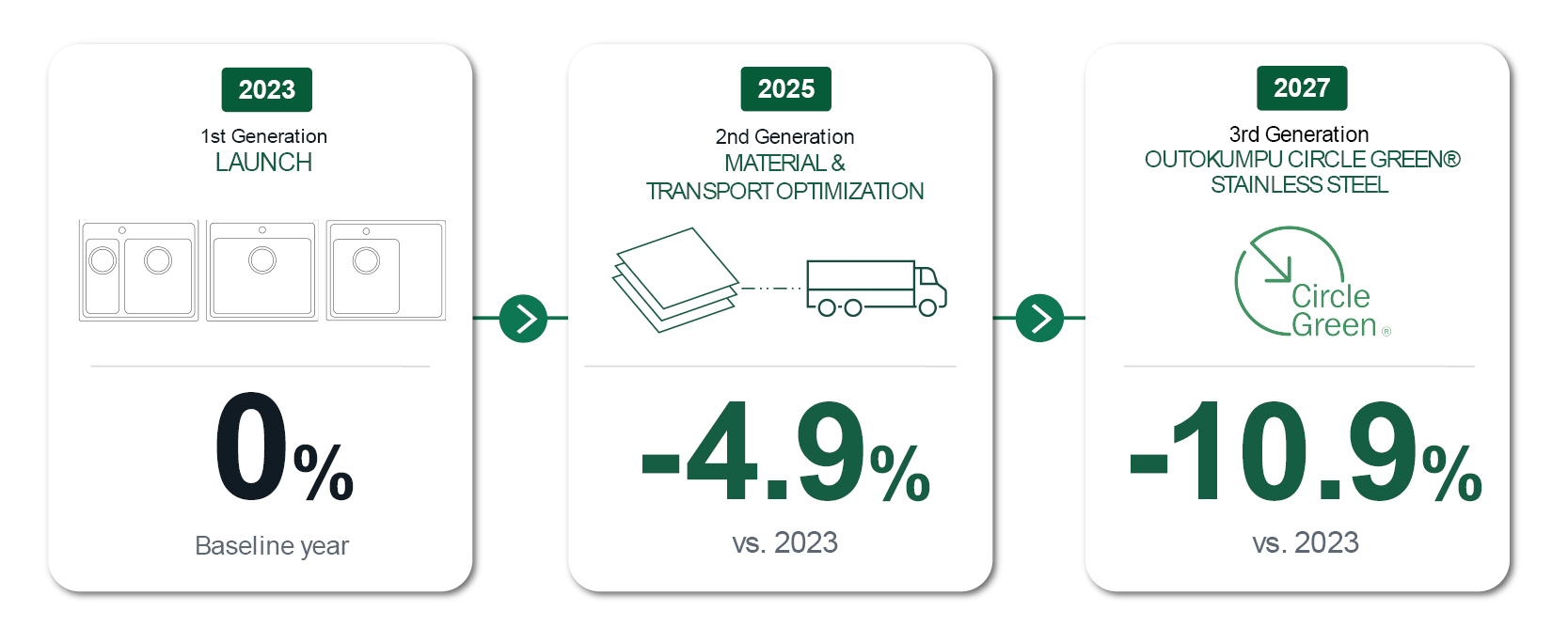
Every generation leaves a smaller footprint​

Stala ONE sink collection carbon footprint reduction*

(baseline year 2023)​

generations_800px.jpg

Through material optimization, transport improvements, and the introduction of Outokumpu Circle Green® stainless steel, we continue to reduce the carbon footprint of the ONE collection.​

*Comparisons are sales-weighted using the 2025 sales mix across all years to ensure consistency between product generations.​


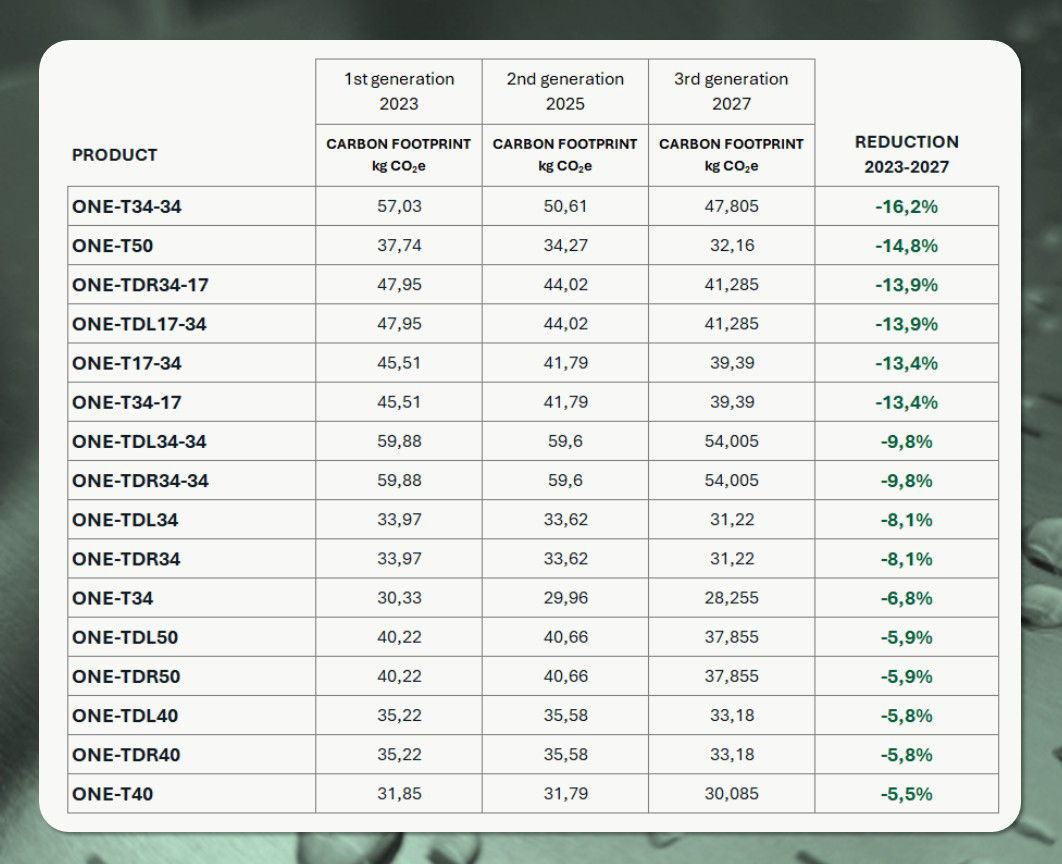
Product carbon footprint reductions of Stala ONE sinks

Reduction compared with the 2023 baseline

ONE_emission reductions 2023-2027.jpg


The figures show product-level carbon footprint reduction. Values indicate the calculated reduction from 2023 to 2027. ONE-T70 is excluded because the source table contains no comparable values.


Comparisons are sales-weighted using the 2025 sales mix across all years to ensure consistency between product generations.


The emission calculations in this table are made in accordance with the Greenhouse Gas Protocol Product Life Cycle Accounting and Reporting standard.


Stala ONE worktop range

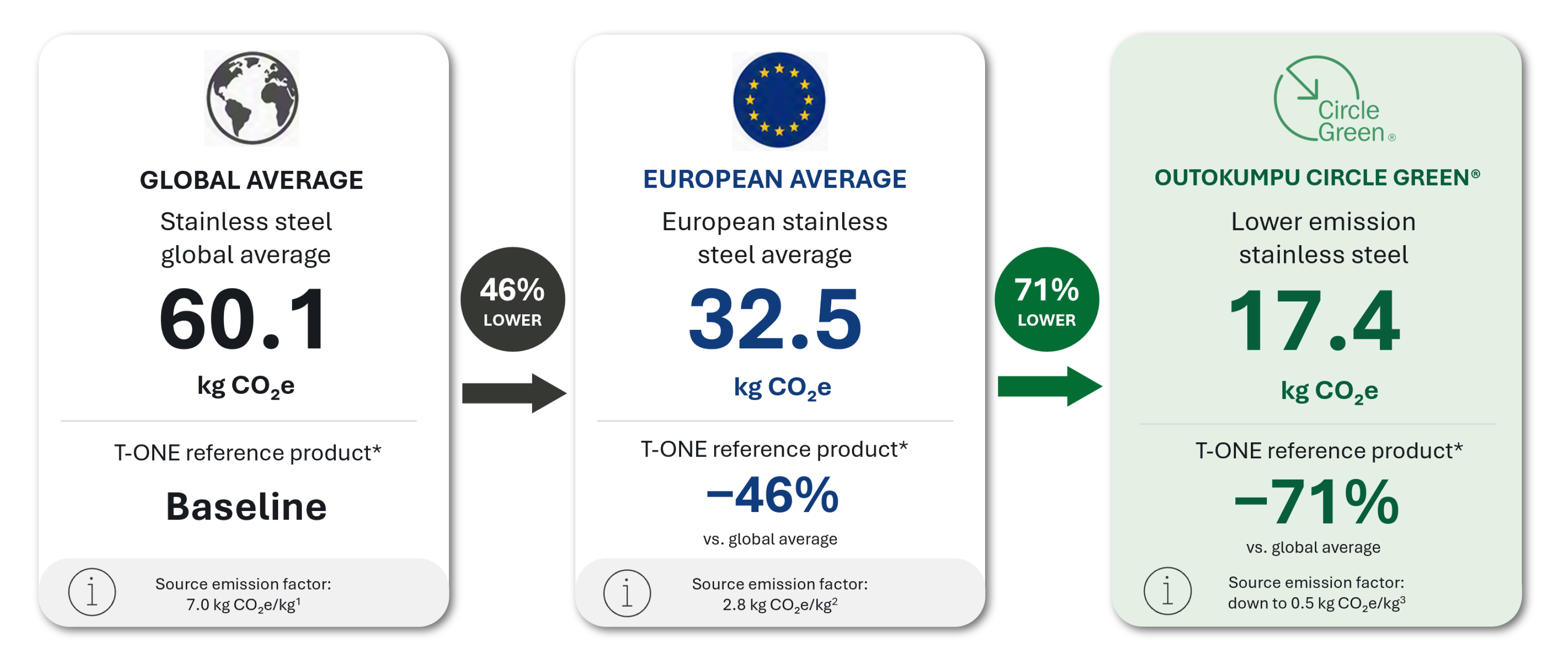
Up to 71% lower carbon footprint

Carbon footprint comparison of Stala ONE worktops using global, European and Outokumpu Circle Green® stainless steels

StainlessSteel-comparision_800px.png

Based on the emission factors used in this comparison, the estimated carbon footprint of Stala ONE worktops is 47–71% lower when using Outokumpu Circle Green® stainless steel than when using the global average stainless steel emission factor.

For the T-ONE reference product, the estimated carbon footprint decreases from 60.1 kg CO₂e to 17.4 kg CO₂e, corresponding to a reduction of approximately 71%.

Sources:
1. Outokumpu calculation based on data provided by CRU, worldstainless and Kobolde & Partners AB.
2. Outokumpu, CBAM and Stainless Steel Fact Sheet, February 2026: “Estimated European peer average: 2.8 kg CO₂e/kg of stainless steel.”
3. Outokumpu Circle Green® CO₂ emissions: down to 0.5 kg CO₂e/kg of stainless steel. The calculations are based on the following four studies (2023):304 Stainless Steel Carbon Footprint Comparison EU, Indonesia and China (2022), CRU Nickel Market Outlook Data” (2022), “The Global Life Cycle of Stainless Steels” (2019), and ISSF Stainless Steel and CO2(2022).

*Stala T-ONE worktop (length 1400 mm, width 600 mm, thickness 30 mm) has been used as the reference product in the comparison calculation.

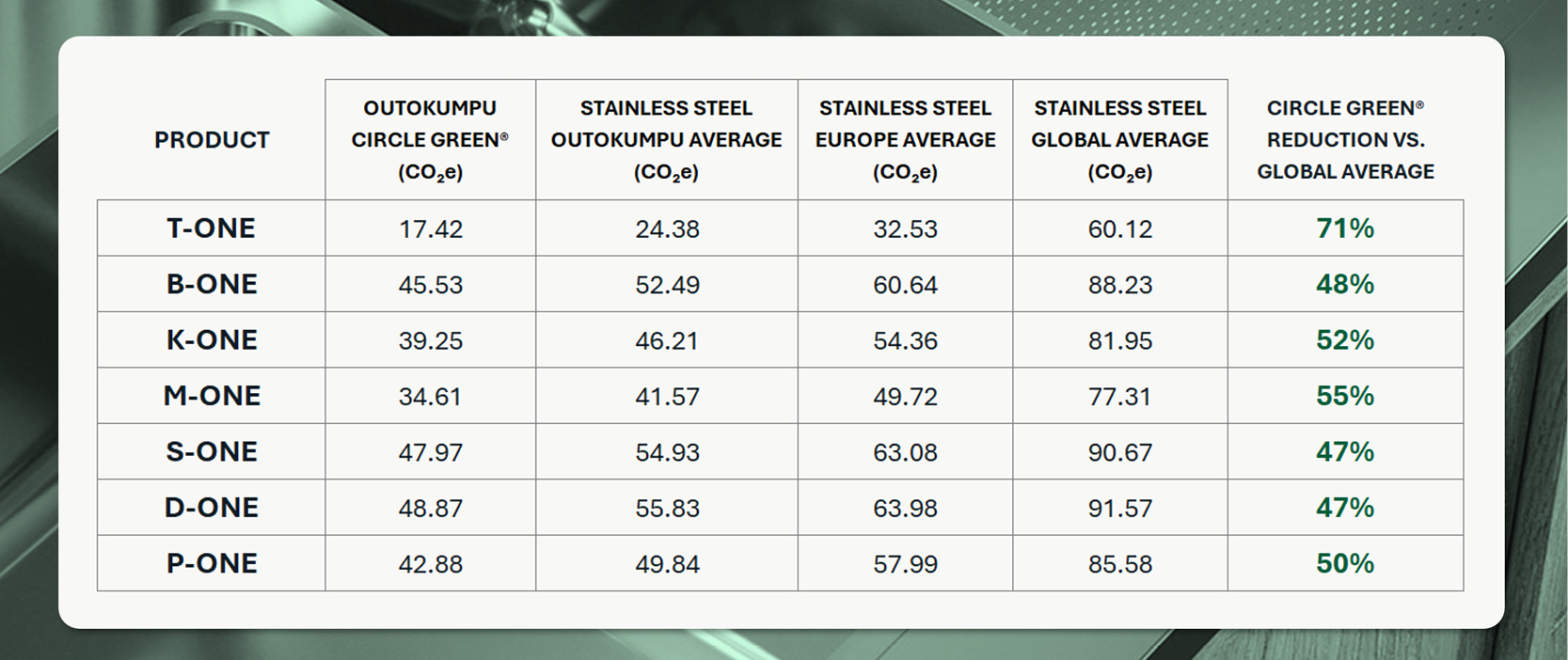
Product-specific carbon footprint comparison

Taulukko_worktops.jpg

Across the Stala ONE worktop range, the estimated carbon footprint reduction is 47-71% when using Outokumpu Circle Green® stainless steel instead of the global stainless steel average emission factor. Calculations are based on a reference worktop size of 1400 × 600 × 30 mm and published stainless steel emission factors used in this comparison.

The emission calculations in this table are made in accordance with the Greenhouse Gas Protocol Product Life Cycle Accounting and Reporting standard.

Manufacturing & Energy Use

• Manufacturing location: Stala Oy, Yrittäjänkatu 4, Lahti, Finland

• Energy sources: 100% fossil-free (water and nuclear)

• District heat technology and source: Heating energy for the manufacturing facility is supplied through the local district heating network. According to the district heating guarantees of origin, the heat is produced using combustion-based technology and renewable solid fuel sources.

• Process overview: The manufacturing process includes stainless steel sheet processing, forming of sink components, welding and assembly operations, surface finishing, product inspection and final packaging.

• Efficiency measures (material efficiency, scrap, water and energy reduction):
- Scrap stainless steel is recycled and returned to the material cycle.
- Material utilization is continuously monitored and optimized.
- Production processes are developed to reduce material waste and improve resource efficiency.
- Product designs aim to maximize durability and service life.


Durability & Circularity

• Expected service life: Typically several decades under normal residential use and proper maintenance.

• Repairability: Minor surface wear, scratches, and stains can often be treated using standard stainless steel maintenance methods. Individual accessories and replaceable components may be replaced when available.

• Disassembly design principles: Products are designed using mechanically assembled and separable components where feasible, enabling maintenance, component replacement, material separation, and end-of-life recycling.

• Recyclability at end-of-life (material-level, not absolute claims):
- Stainless steel: recyclable
- Wood-based components: recyclable or energy recovery depending on local facilities
- Plastic components: recyclable where suitable collection systems exist

Methodology and standards 

Transparent calculations based on established standards

Stala's product carbon footprint calculations follow recognized international standards and methodologies.

Standards and methodology

The calculations are based on:

Product Carbon Footprint (PCF): GHG Protocol Product Life Cycle Accounting and Reporting Standard

ISO 14040 – Life Cycle Assessment: Principles and Framework.

ISO 14044 – Life Cycle Assessment: Requirements and Guidelines.

ISO 14067 – Carbon Footprint of Products.

General information and scope

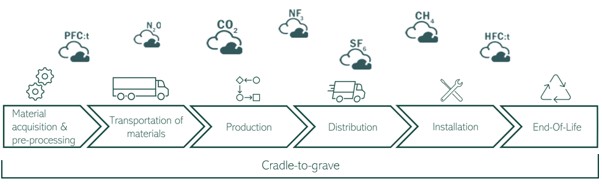
The emission inventories have been calculated according to the GHG Protocol Product Life Cycle Accounting and Reporting standard. In addition to carbon dioxide emissions, the emission inventories include also the global warming impact of six other greenhouse gases: methane (CH4), nitrous oxide (N2O), hydrofluorocarbons (HFCs), perfluorocarbons (PFCs), sulphur hexafluoride (SF6) and nitrogen trifluoride (NF3). The unit of calculation is carbon dioxide equivalent (CO2e), which considers all of these. 

The intended audience of the emission inventories is the report-commissioning organization of whom may utilize the information in product development and marketing.

Functional unit of analysis

One packed product i.e., one kitchen sink or counter and user’s manuals packed in cardboard box with plastic is used as a functional unit. The weight varies depending on the product in question.

Inventory boundary and process description

The inventory boundaries include the life cycle emissions from material acquisition to end of life treatment. Emissions are assessed as cradle-to-grave. 
Picture1.jpg

The process starts with the acquisition of the raw materials and production of the components e.g., stainless steel, damping mats, water seals, and fasteners. Primary data is used when available. Otherwise, general coefficients are utilized. The materials and components are transported to the factory by truck, delivery truck, or van and cargo ship when needed.

Calculation methodology & quality assurance

Calculation methodology
Product carbon footprint calculations are generated using a product-specific calculation tool developed and customized for Stala's products, materials, and manufacturing processes.

Methodological basis
The calculation model follows internationally recognized greenhouse gas accounting principles and utilizes emission factor data maintained and regularly updated by Green Carbon.

Model maintenance
The calculation tool and underlying emission factor database are maintained by Green Carbon to support consistent and up-to-date product carbon footprint calculations.

Transparency statement
The published product carbon footprint values are based on expert-developed calculation models, product-specific material data, and manufacturing process information available at the time of calculation. The methodology is designed to provide transparent, consistent, and decision-supporting environmental information for customers and stakeholders.

Packaging Information

Material composition: Packaging components consist of cardboard and plastic materials. Individual packaging components are designed as mono-material solutions to facilitate sorting and material recycling.

Recyclability: Packaging is designed for material recycling. Packaging components should be sorted according to local recycling and waste management guidelines.

Recycled content: Recycled content information is provided when verified supplier data is available.


Limitations & Definitions

Scope & Data Availability
Information is based on data available to Stala Oy at the time of publication and may include supplier-provided information, material specifications, manufacturing data, and product carbon footprint calculations. Data availability may vary between materials, components, and suppliers.

Uncertainties & Assumptions
Where supplier-specific information is unavailable, data may be reported as “Not disclosed”, “Data unavailable”, or based on generic material information where clearly indicated.

Regional Applicability
Environmental information, recycling practices, and end-of-life treatment options may vary by country and region. Customers should refer to local regulations and recycling systems.

Definitions
•  Recycled content: Proportion of recycled material in a product or material, based on available supplier data.
•  Recyclable: Material can be collected, sorted, and processed using existing recycling technologies. Actual recycling depends on local infrastructure.
•  Low-emission: Lower greenhouse gas emissions compared to a defined reference value, benchmark, or alternative material.

Continuous Improvement
Stala continuously develops and updates product transparency information as additional data, verified information, and improved methodologies become available.

Contact / Data Requests

• Sustainability contact: Sauli Valjakka, sauli.valjakka(a)stala.com

• Technical documentation requests: Ville Siihola, ville.siihola(a)stala.com


Get inspired

#stainlessforlife